
封神榜
GT Voice: Chinese investment could help Germany stabilize its talent base_我的网站

A | 由麦凯尔维工程学院机械工程和材料科学的Lilyan & E. Lisle Hughes教授Srikanth Singamaneni和Singamaneni实验室的前博士后Anushree Seth领导的研究人员开发了FluoroDOT测定法。
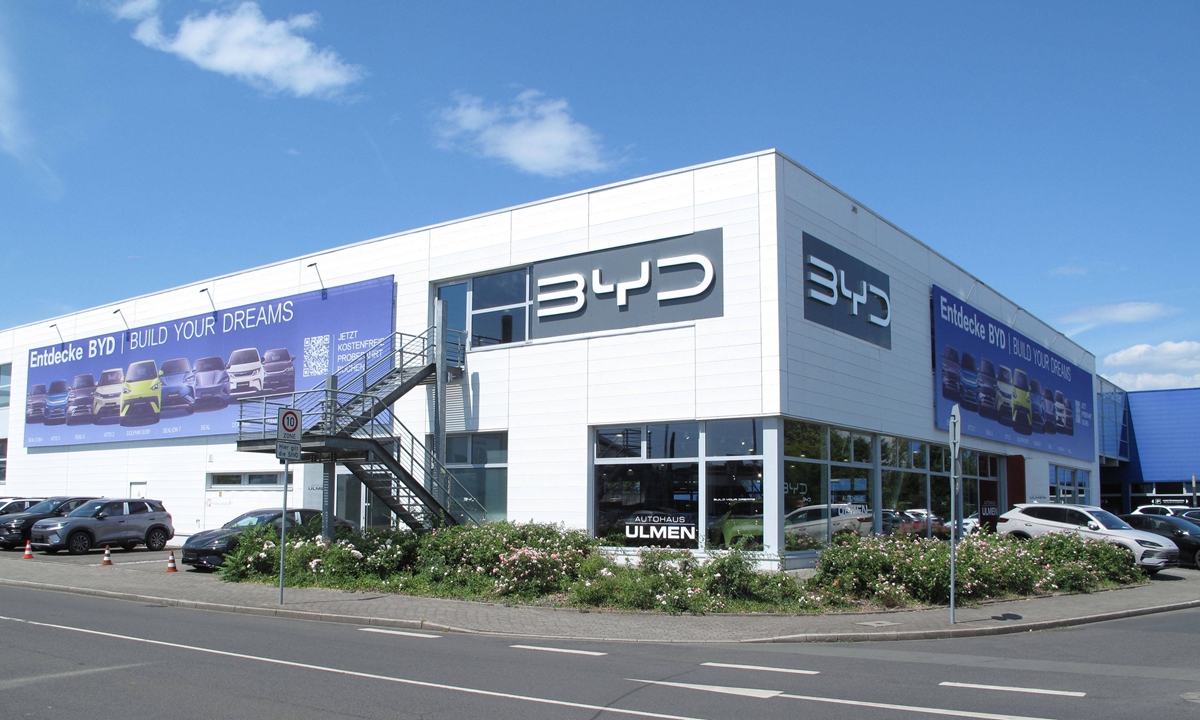
Germany's industrial woes have increasingly become a hot topic of discussion. The latest Engineer Monitor report from professional association Verein Deutscher Ingenieure and the German Economic Institute offers a new look at the issue.
The report showed that there were 58,392 unemployed individuals in the engineering and information technology (IT) professions in the fourth quarter of 2025, the highest level since the survey began in 2011.
Compared with the previous year, the number of unemployed increased by 16.7 percent, according to German media reports on Sunday.
These figures lay bare the challenges confronting the country's manufacturing sector. The reasons for the industrial woes are multiple. The soaring energy costs caused by geopolitical conflicts, the decline in exports caused by rising protectionism and low external demand, and the structural pain caused by industrial chain restructuring are all squeezing the space of German manufacturing.
Manufacturing is the backbone of Germany's economy, and engineers and IT specialists constitute the core force that sustains this pillar. For decades, the country's reputation for "Made in Germany" excellence was built on the expertise of these skilled professionals. Regardless of the macroeconomic ups and downs, preserving the stability and continuity of its industrial talent pool represents a strategic bottom line for Germany.
Should large numbers of highly skilled technical professionals leave the industry or sit idle, industrial research and development (R&D) and production cycles will be disrupted. Over the longer term, such a waste of human capital will erode Germany's industrial innovation capacity and, ultimately, undermine the foundations of its global competitiveness.
In this context, the urgent task for Germany is to create sufficient quality positions for its technical talent. Should it fail to do so in the short term, then Germany needs to embrace a more open‑minded development approach. Shoring up its manufacturing base cannot be achieved solely through protecting domestic companies; it also requires a significant expansion of effective investment to create enough high‑quality jobs that can attract and retain skilled talent.
This is exactly where China‑Germany cooperation could deliver tangible results. According to the FDI Report 2025 published by Germany Trade & Invest (GTAI), the total number of foreign investment projects in Germany fell 9.3 percent overall to 1,564 in 2025. Nonetheless, Chinese companies became the largest source of foreign investment projects in Germany in 2025, overtaking the US for the first time since 2017.
Chinese companies launched 228 investment projects in Germany in 2025, up 14.6 percent year-on-year. More than one in five Chinese investment projects involved production and R&D activities, above the overall average for foreign investment projects in Germany. This is a sign that Chinese firms are deepening their integration into the local industrial base, according to GTAI.
Observers noted the trend, pointing out that China is becoming an important force in driving German re‑industrialization. In industries where Germany urgently needs to rebuild its competitive edge, such as electric vehicles, batteries, energy technology, digital manufacturing, and automation, China is emerging as an increasingly significant complementary partner. In these critical areas that will determine industrial competitiveness in the coming decades, the relationship between China and Germany is not merely one of rivalry; there are clear and substantial complementarities. Germany still boasts world‑leading engineering expertise, precision manufacturing capabilities, and a strategic location at the heart of the European market.
China has complete and highly integrated supply chains for raw materials and intermediate goods and large capacity for increasing production. When Chinese automakers set up R&D centers in Germany, or when Chinese tech firms collaborate with German factories to build smart production lines, the beneficiaries are not only the Chinese companies but also the German engineers who would otherwise face redundancy.
Cross‑border investment cannot flourish without a sound policy environment. Chinese companies are apparently willing to develop in Germany, but it can only happen on the premise that the German side provides a fair, reasonable and predictable business environment, reduces non-market interference in commercial activities, and allows capital to operate in accordance with market rules.
If the two countries are able to reach a deeper level of cooperation in investment, many of Germany's trade‑related concerns may well find more pragmatic solutions. The deep integration of industrial value chains would facilitate two‑way trade, creating renewed momentum for German exports of machinery, vehicles, chemicals, and other competitive products to China.
。该研究最近发表在《细胞报告方法》上。这种高度敏感的检测方法能够在大约30分钟内看到并测量单个细胞分泌的蛋白质。

B | 树突状细胞在不同时间点分泌蛋白1(TNFa,红色显示)和蛋白2(IL-6,黄色显示)的FluoroDOT检测图像(从左到右。未受刺激、受刺激30分钟、1小时、2小时和3小时)。细胞的细胞核以蓝色显示。白色箭头突出显示了只分泌一种蛋白质或两种蛋白质的不同数量和不同时间点的细胞。图像: Srikanth Singamaneni/华盛顿大学与来自其他大学和华盛顿大学医学院的科学家一起发现FluoroDOT检测法用途广泛,价格低廉,可适应任何实验室环境,并且有可能比目前常用的检测法更全面地了解这些蛋白质。生物医学研究人员通过分泌蛋白来了解细胞间通讯、细胞信号传导、激活和炎症等方面的信息,但目前的方法在敏感性方面受到限制,而且可能需要24小时的繁琐处理流程。质子-荧光是Singamaneni实验室创造的一种质子增强的纳米标签,比传统的荧光标签亮16000倍,信噪比超过30倍,这是FluoroDOT检测法与其他检测法的区别所在。Singamaneni说:"质子-荧光剂是由金属纳米粒子组成的,它作为天线拉入光线并增强分子荧光团的荧光发射,从而使它成为一种超亮的纳米粒子。"这种质子-荧光的超亮发射使用户能够看到极少量的分泌蛋白,这是他们在现有测定法中无法做到的,加上利用定制的算法,用每个簇或斑点的颗粒数量或点状图案,实现以数字方式测量高分辨率信号。

C | 此外,它不需要特殊设备。Singamaneni和他的合作者于2020年在《自然-生物医学工程》杂志上首次发表了他们的等离子体氟化物工作。这项正在申请专利的质子荧光技术由圣路易斯华盛顿大学技术管理办公室授权给Auragent生物科学有限公司。"使用一个简单的荧光显微镜,我们能够同时对一个细胞以及它周围分泌的蛋白质的空间分布进行成像,"Seth说,他作为Singamaneni实验室的博士后学者从事这个项目,并作为Auragent生物科学公司的首席科学家(细胞应用)继续从事这项工作。

D | "我们看到不同细胞类型的有趣分泌模式。

E | 这种检测方法还能同时观察来自单个细胞的两种类型的蛋白质。当多个细胞受到相同的刺激时,我们可以将同时分泌两种蛋白质的细胞与只分泌一种蛋白质或根本不分泌的细胞区分开来。"为了验证这项技术,该团队使用了从人类和小鼠细胞中分泌的蛋白质,包括感染了结核分枝杆菌的免疫细胞。合作者和共同作者之一,医学博士Jennifer A. Philips,医学和分子微生物学系的Theodore和Bertha Bryan教授,以及医学院传染病科的共同主任,已经在她的实验室中使用了FluoroDOT测定。Philips举例说:"当结核分枝杆菌感染免疫细胞时,这些细胞通过分泌重要的免疫蛋白(称为细胞因子)做出反应。但不是所有的细胞都以同样的方式对感染做出反应。FluoroDOT测定使我们能够看到群体中的单个细胞如何对感染做出反应--看到哪些细胞正在分泌以及朝哪个方向分泌。这在旧技术中是不可能的。
Current article:http://tcayao.panningbuquanchencaibingzhang.cyou/news/20260826_77201.html
Published on:00:00:00
栏目相关
- 东亚杯末战对垒中国香港队 男足选拔队今日全力争胜
- 官方:国米20岁中卫伊万·梅耶租借加盟蒙扎,含买断+反买断选项
- 世界女子围棋赛首轮 中国队5将喜忧参半
- 五层楼高树倒压毁货车 车顶凹陷玻璃碎
- “保”驾护航,“救”在身边——保育员急救技能评比
- MLID推测RTX 4070不会是已取消的RTX 4080 12GB换皮
- 寿宁县凤阳镇:葡萄丰年看“大戏”
- 长盈精密:公司已与国内外多家人形机器人头部品牌建立合作,并已有订单进入量产
- 竞逐全球“箱”当给力,江苏向海而新“要”来了什么?,竞逐全球“箱”当给力,江苏向海而新“要”来了什么?
- 羊了个羊被质疑抄袭,公司仅7人参保_《羊了个羊》被曝疑抄袭《3tiles》_简游
- Academics See No Clear Exit for Johnson or Replacement PM
- 长城快评丨“野人哥”冲线时停步唱国歌 太有“排面”了